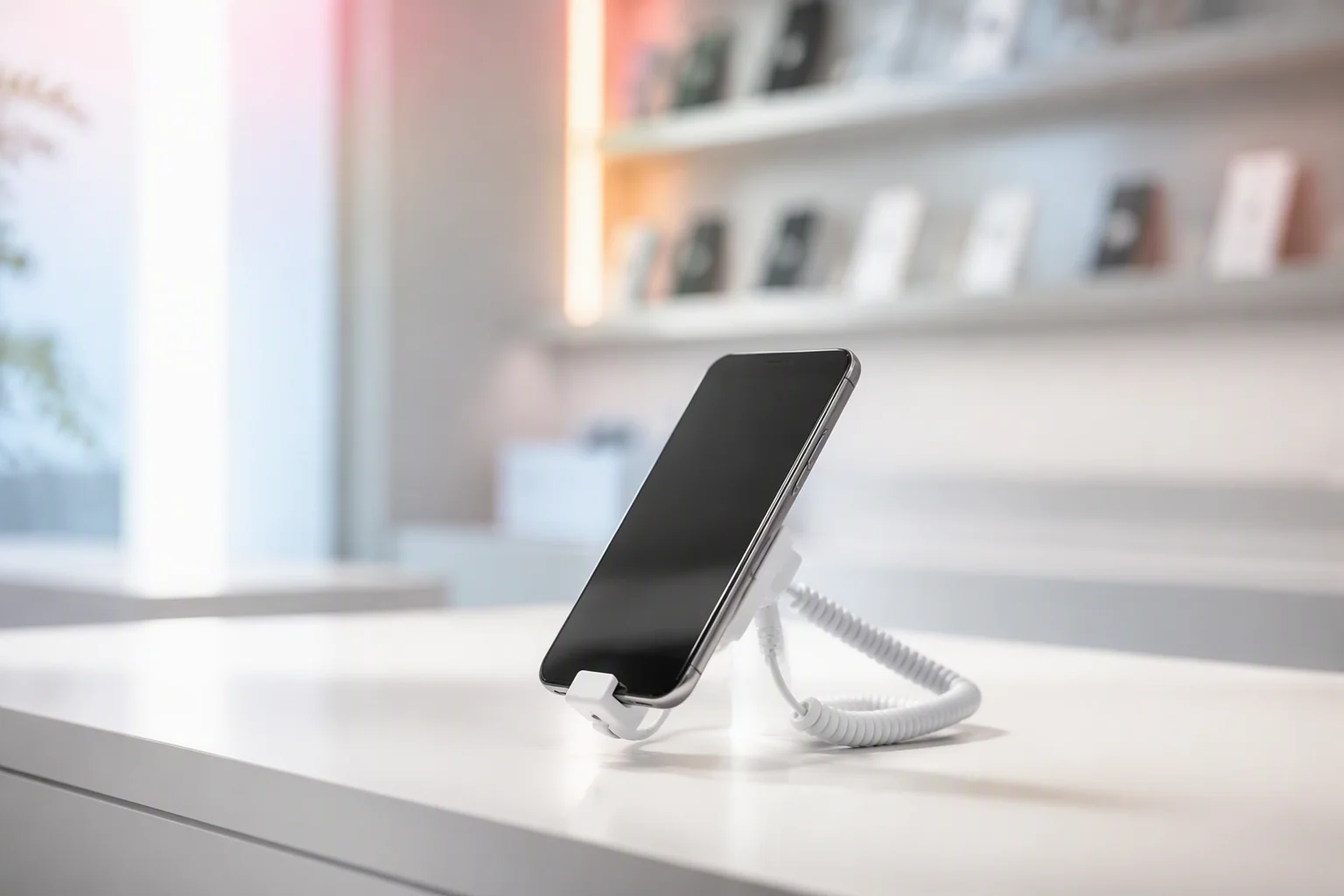
New Retail Comprehensive Solution: Management and Anti-Theft
By combining RFID and EAS with IoT technology, a new integrated retail solution connects omnichannel data and improves efficiency across every link.

Why now
Competition has moved from cost to efficiency
With the rapid development of information technology, retail competition has shifted from simple cost advantages to efficiency in production, in logistics response, and in intelligent store management. For retailers, management efficiency and customer experience directly affect brand image and competitiveness.
The margins say why. European food retail runs on roughly 1.7% net margin (industry research data, FMI) — every inefficiency you remove drops almost directly to profit. In that arithmetic, the answer is not a better tag or a better alarm alone. It is one stack that combines management and anti-theft: RFID for data, EAS for protection, and IoT as the pipe that joins them — with electronic shelf labels at the point where the store meets the shopper.
The stack
What RFID + EAS + IoT actually does
RFID is a non-contact automatic identification technology enabling fast data reading and real-time inventory visibility. EAS is an electronic anti-theft system that triggers alarms through sensor signal interference. Combined, RFID chips are embedded into EAS anti-theft tags.
- Unified tagging — one label simultaneously prevents theft and enables automated product registration, real-time inventory tracking and efficient supply chain management.
- Automated inventory — no manual checks or barcode scanning required; quantities are tracked instantly with handheld devices or PC systems.
- Real-time visibility — prevent out-of-stocks, enable fast product location and avoid lost sales.
- Cost reduction — replaces separate barcode and EAS hardware, lowering operational costs.
- Flexible supply chain — non-contact processes across purchasing, sales, theft prevention and replenishment.
Returns
Four returns for the retailer
Management efficiency
ESL price updates in 3–5 seconds versus paper-tag error rates of 3–5%, which fall below 0.1% after ESL rollout (industry research data).
Fewer customer complaints
Price accuracy on every shelf: one pharmacy chain moved from 40% of goods without visible pricing to 100% accurate shelf prices with ESL (industry research data).
Loss prevention
EAS protection stays on open display, while consumer-electronics shrink sits above the 1.4% retail median (industry research data).
Digitization
Every price, promo and stock signal reaches the cloud: a 600+ store pharmacy chain cut catalogue price changes from 32 hours to minutes with no staff intervention (industry research data).
Visible layer
Electronic shelf labels: the face of the stack
In the D.F.S catalog, the shelf-facing layer of this solution is the ESL family — e-ink price tags in the same Bluetooth 4.2 network as the store's relays, plus a 10.1″ LCD digital display node for storefront promos. All of them support multiple languages, barcodes, QR codes and pictures, at a 180° display angle and 0–50 °C operation; waterproof low-temperature variants run in aquatic and frozen-aisle zones.
| Model | Size | Refresh / range | Notes |
|---|---|---|---|
| 2.1″ e-ink | 72.5×36×15 mm | 3–5 s · ≥5 m adjustable | CR2450×4, 5-year service life (5 refreshes/day) |
| 2.9″ e-ink | 95×45×13 mm | 3–5 s · ≥5 m adjustable | BWR colorway for promotions |
| 4.2″ e-ink | 109×87×15 mm | 30–50 s refresh | Imported CPU/RF chips, strong-error-correction transmission, 5 frame colors |
| 7.5″ e-ink | 178×120×10 mm (single side) | ≥5 m adjustable | CR2450×4 or rechargeable cell |
| 10.1″ LCD DFS-A10S | 258×157×14.2 mm, 340 g±5% | ≤30 W, HDMI 2.1 | IPS 175°, cloud CMS + open API/SDK, WiFi/Bluetooth |
Deployment
How the stack goes into a store
The integration pattern follows four steps — the specifics of a given chain's base are scoped per project.
- Every fast-moving or high-value item carries one combined RFID + EAS label, so logistics checks and theft detection read the same physical tag.
- Shelves are tagged with ESL nodes on the store's Bluetooth 4.2 infrastructure — price changes then propagate in seconds, no shelf walk needed.
- Alarm events and shelf data converge in one management layer; the 10.1″ LCD node turns the same feed into touchpoints (flyers, promos, product info).
- Reactions are automated: cloud CMS plus open API/SDK connect the shelf data to POS planning, replenishment and the store's own dashboards.
Related
Solutions that ship today
Electronic Shelf Labels
2.1″–7.5″ e-ink price tags and the 10.1″ LCD digital display node, one Bluetooth 4.2 network.
Anti-Theft Display Cables
Open-display protection with ≥90 dB alarm and charging on one line — the EAS-adjacent layer for devices.
Electronic Locks
2.4G authorized-access locks for cabinets and drawers — no wiring, no drilling, no missing keys.
Design your digitized store.
Tell us your footprint and SKU count — we come back with the combined RF/EAS/ESL layout within 48 hours.